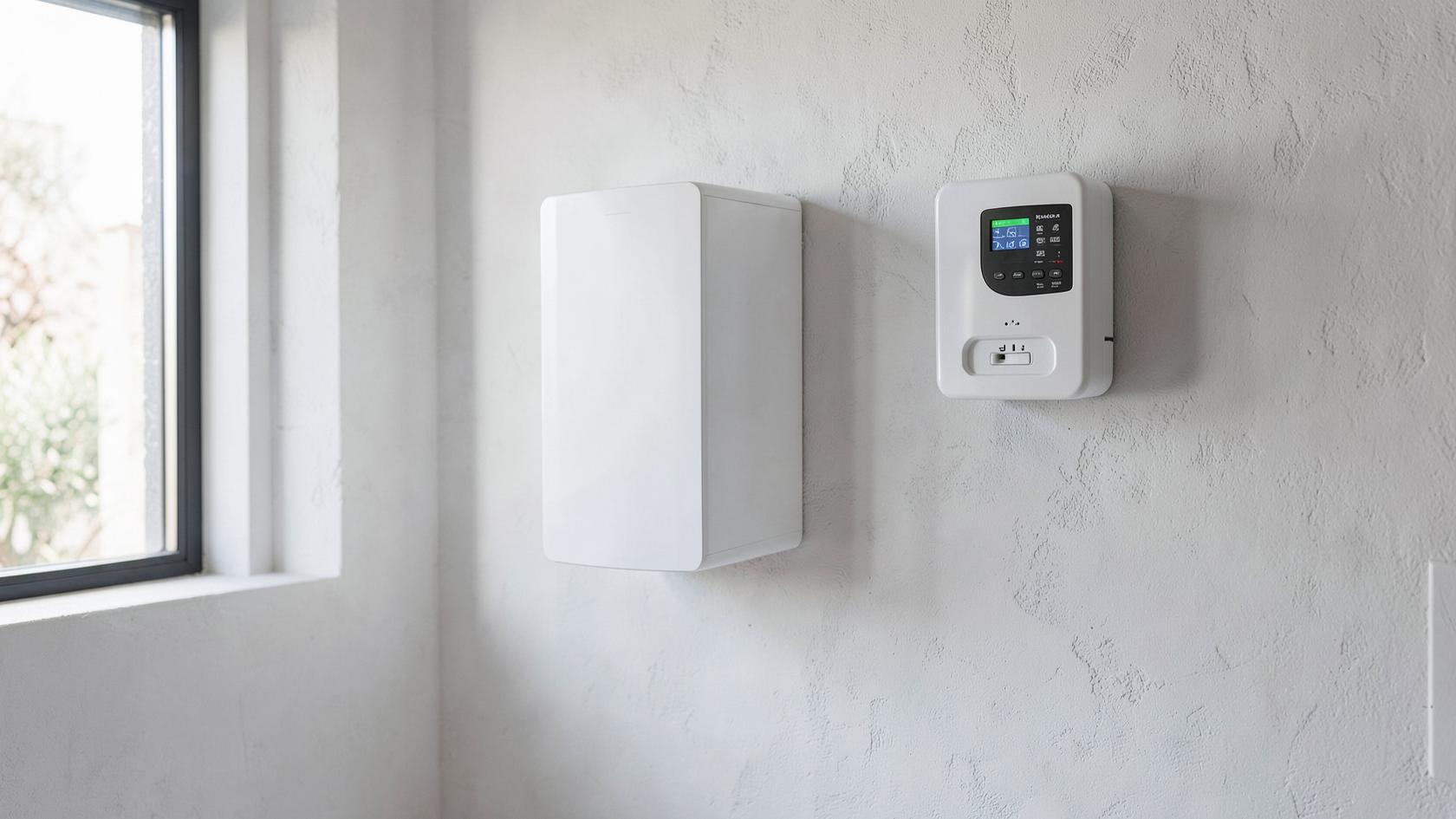
There is no single correct battery size for a Maltese home. The right size depends on how much electricity you use in the evening, how much solar surplus you actually have to store, and how much of your home you want running during a power cut.
Usable kWh is not the same as nominal kWh
Batteries are advertised by their nominal capacity, but you can only draw the usable capacity. Most manufacturers hold back a reserve to protect the cells, so a battery sold as 10 kWh might give you somewhere around 9 kWh in practice. Always ask the installer for the usable figure in writing and compare quotes on that basis, not on the headline number.
Start with your evening and overnight use
A battery mainly shifts daytime solar into the hours after sunset. So the number that matters most is how much electricity you use from roughly late afternoon through to the following morning. If your household uses about 12 kWh a day in total and around half of that falls outside daylight hours, you are looking at roughly 6 kWh of evening and overnight demand — which is the load a battery would be trying to cover.
Then check your solar surplus
A battery can only store electricity you did not use during the day. If your PV system is modest, or if you are at home all day running AC, there may be less surplus than you think. Buying a large battery with little surplus to fill it simply means it sits part-empty most days. Our solar calculator gives an indication of how much your system could generate, and are solar panels worth it in Malta in 2026 covers the PV side of the decision.
Backup power changes the maths
If keeping the lights, fridge and a fan or two running during an outage matters to you, size for that separately. Backup needs a compatible inverter setup and a decision about which circuits stay live — a larger battery alone does not guarantee it. See are home batteries worth it in Malta for how backup actually works in practice.
Rough starting points
| Household profile | Rough size | What it tends to cover |
|---|---|---|
| Light evening use, smaller household | Around 5 kWh | Fridge, lighting, TV, a little cooking. Often enough to cover the evening without much waste. |
| Typical family with meaningful evening load | Around 7.5–10 kWh | Cooking, laundry, AC for part of the evening, several people at home. Usually a sensible range. |
| High evening demand or larger backup ambition | 13.5 kWh and above | Heavy AC use, EV charging, or wanting more of the home to stay live during an outage. |
Treat these as conversation starters, not engineering recommendations. Compare them against your own evening usage and your realistic daily solar surplus before shortlisting anything.
Why bigger is not automatically better
- Capacity you never fill earns nothing — it just raises the upfront price.
- Grant caps limit the support available, so the cost of the extra kWh often falls entirely on you.
- A battery sized well beyond your surplus lengthens payback rather than shortening it.
- Physical space, wall strength and ventilation all constrain what can actually be installed.
Check the grant before you commit to a size
Malta's battery grant is capped both per kWh and per system, so the support does not scale indefinitely with capacity. Read battery grants in Malta 2026 before you order, and apply before you buy.
A sensible way to decide
- Work out your evening and overnight kWh from your ARMS bill.
- Estimate your realistic daily solar surplus.
- Take the smaller of the two as your working target.
- Add capacity only if backup during outages genuinely matters to you.
- Compare quotes on usable kWh, not nominal kWh.
Coming soon: a battery calculator to size storage around your own usage and solar surplus.