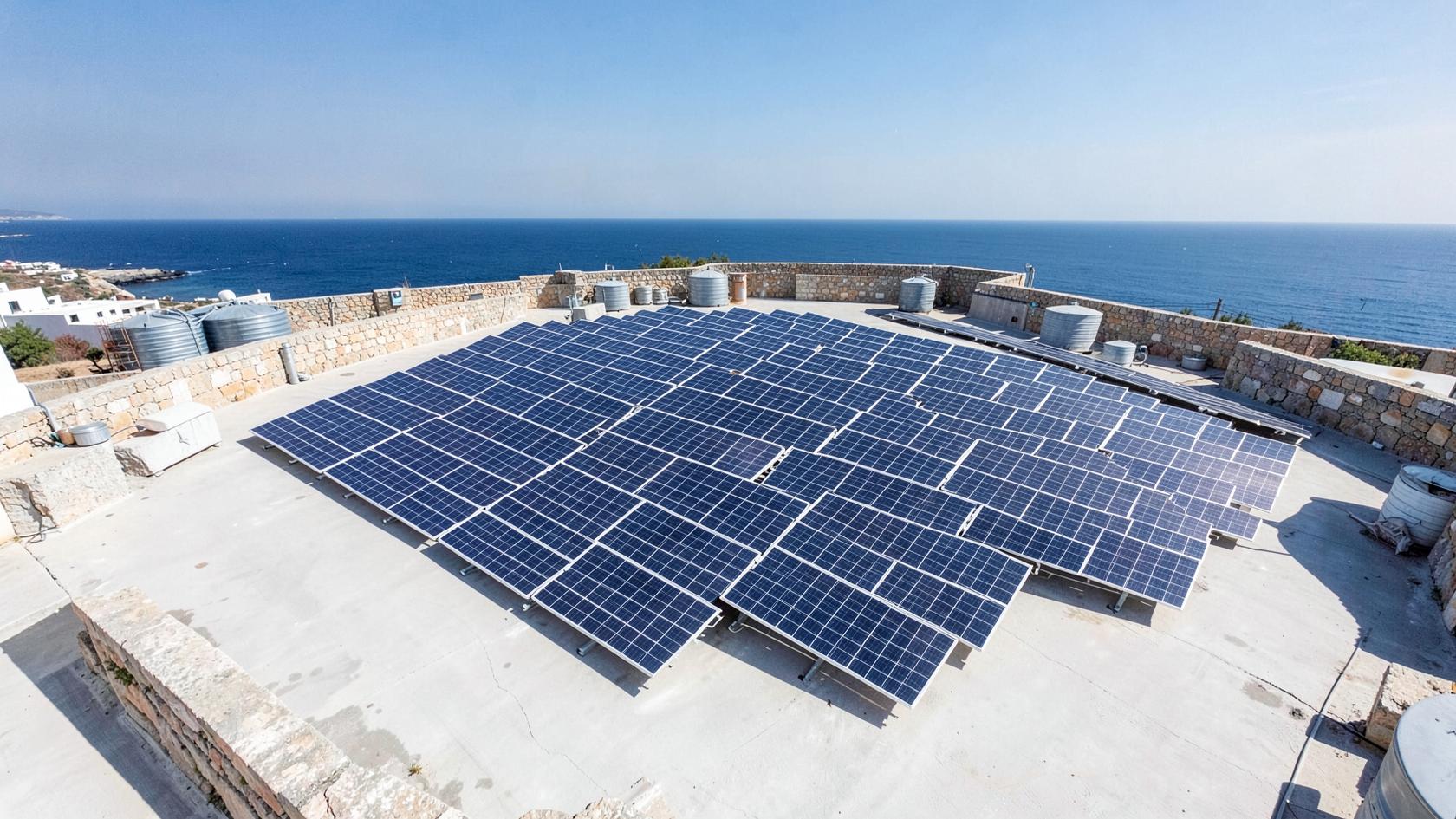
Choosing a solar system is not really about asking:
“How many panels can I fit?”
The better question is:
“What size system do I need for the electricity my household uses — and is likely to use in future?”
This guide is specifically about sizing solar to meet your household’s needs. You can install more capacity and export additional electricity to the grid, but that becomes a different financial decision because the return depends much more on export tariffs, system cost and payback.
Start with your electricity use
Your annual electricity consumption is the best place to start.
As a rough guide:
| Annual electricity use | Approx. solar system size |
|---|---|
| 3,000 kWh | Around 3 kWp |
| 4,500 kWh | Around 4–5 kWp |
| 6,000 kWh | Around 5–6 kWp |
| 8,000 kWh | Around 7–8 kWp |
These are only starting points. The right system depends on your property, your roof and how much electricity you expect to use over the coming years.
Think about future electricity demand
Solar is a long-term investment, but household electricity use can change quite quickly.
Before deciding on system size, think about what your home may look like in five or ten years.
For example:
- Will another family member be living at home?
- Are you likely to buy an electric vehicle?
- Could you install more air-conditioning?
- Are you considering a pool or pool heating?
- Will someone start working from home more often?
- Could you replace gas appliances with electric ones?
- Are you planning an extension or major renovation?
An EV can add a meaningful amount of annual electricity demand. More air-conditioning can also materially increase summer consumption.
So the useful calculation is not just:
What do I use today?
It is:
What am I reasonably likely to use in future?
What size panels should I choose?
Solar panels come in a wide range of power ratings.
You may see panels around 400–450 W, while larger 500–600 W+ panels are also available.
A higher wattage panel is not automatically the better choice.
Higher-powered panels are often physically larger, so what matters is how efficiently the system uses the roof you actually have.
For example, a system of around 4.5 kWp could potentially use:
- 10 × 450 W panels
- around 8 × 560 W panels
The total system capacity is similar, but the physical layout could be quite different.
The things that matter are:
- total system size in kWp
- panel dimensions
- panel efficiency
- usable roof space
- layout around obstacles
- price and quality
So don’t choose a panel simply because it has the largest wattage number.
How much roof space do I need?
This is particularly important in Malta.
A roof can look large but have much less usable solar area once you account for:
- water tanks
- air-conditioning equipment
- stairwell structures
- skylights
- chimneys
- parapet walls
- access routes
- neighbouring buildings
Flat roofs also need careful design because rows of panels may require spacing to avoid shading one another.
This means two households with exactly the same electricity consumption can need very different solar layouts.
Does orientation matter?
Yes.
South-facing panels generally produce very strongly in Malta, but perfect south-facing orientation is not essential.
East-facing panels generate more earlier in the day, while west-facing panels generate more later in the afternoon.
That can be useful depending on when your household actually uses electricity.
For example, a home where everyone returns in the afternoon and switches on air-conditioning may have a different ideal layout from a home with heavy daytime consumption.
So orientation should be considered alongside your electricity-use pattern, not in isolation.
How much does shade matter?
Shade can have a significant effect on solar output.
Common sources of shading in Malta include:
- neighbouring buildings
- penthouses
- parapet walls
- water tanks
- chimneys
- trees
- rooftop equipment
A part of the roof that looks sunny at midday may still spend significant periods shaded in the morning or afternoon.
The sun’s position also changes throughout the year.
That is why the number of panels that physically fit on your roof is not necessarily the same as the number that can perform effectively.
A good solar design should account for shading before deciding on the final layout.
Size the system around your needs
The purpose of this guide is to answer one question:
How much solar capacity is appropriate for the electricity your household is likely to use?
A sensible process is:
Current electricity use + expected future demand → target system size
Then check whether your available roof space, orientation and shading can accommodate that system effectively.
You can choose to install more capacity than your household expects to consume and export the additional electricity.
That may make sense in some circumstances, but it changes the economics. The return then depends much more heavily on the applicable feed-in tariff, the additional capital cost and the value of exported electricity. Our guide on solar grants and feed-in tariffs in Malta explains how those export payments work.
That is a separate calculation from simply sizing solar to meet your household’s needs.
So how many panels do I need?
For a household using around 4,000–5,000 kWh per year, something in the region of 4–5 kWp may be a sensible starting point.
But the number of physical panels could vary significantly depending on whether you choose 430 W, 500 W, 600 W or another panel size.
The more useful way to think about it is:
How much electricity do I need? → What system capacity does that require? → What panel layout works best on my roof?
That is far more important than the headline number of panels. If you’re still weighing up the investment itself, read are solar panels worth it in Malta in 2026?
Estimate your system size
Want a quick starting point? Try the EnergyWise Malta Solar Calculator to estimate a system size based on your household’s electricity use.